Battery or gas lawn mower for your yard
Pick battery or gas by how much grass you cut, how often, and what a spare battery costs.
By the Striped Yard editors · 5 min read · Published Nov 19, 2026
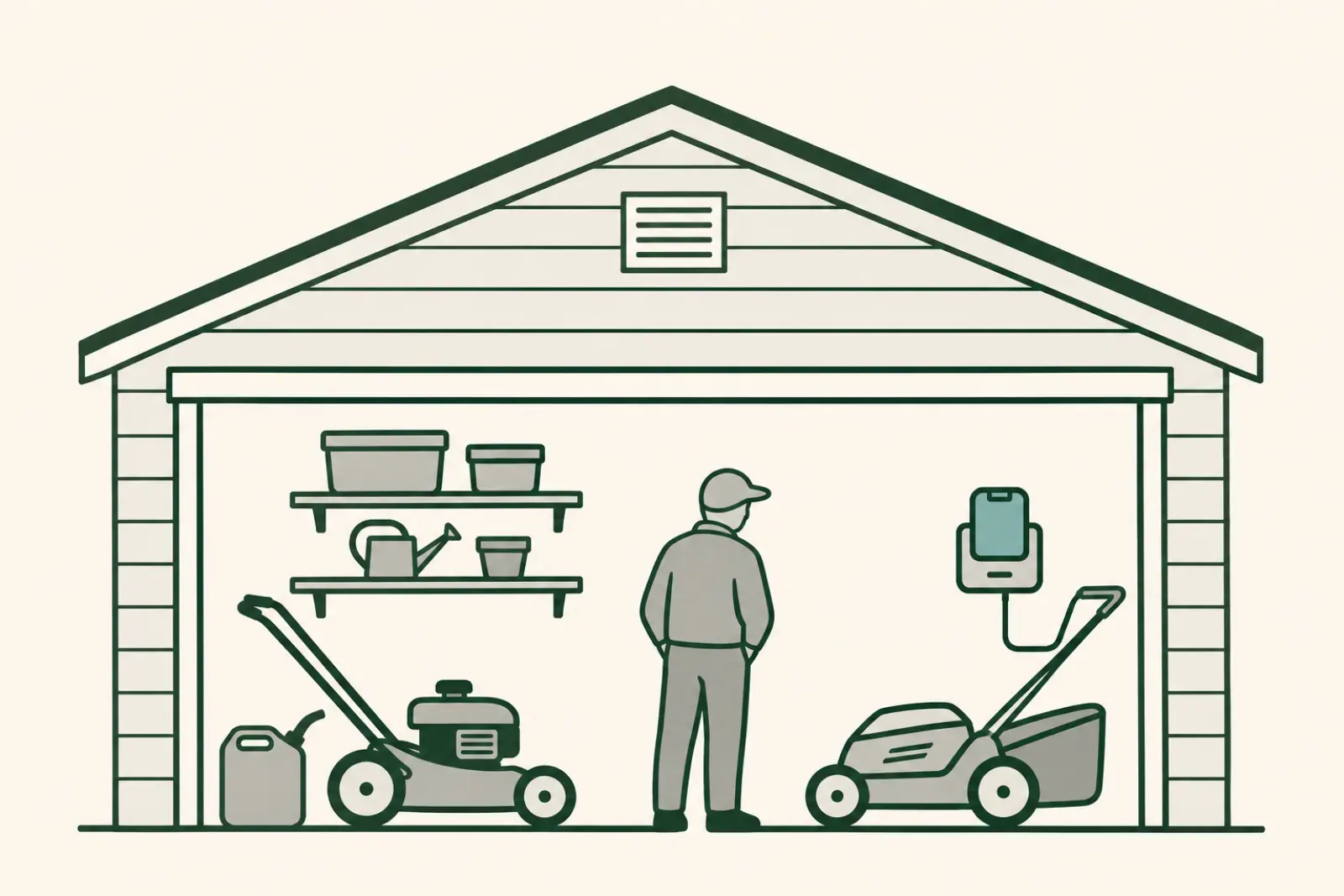
You have a gas mower that is getting old, or a first lawn and nothing to cut it with, and every store aisle now puts a battery model next to the gas one. The worry is the same for everyone making the switch: will it have the power, and will it finish the lawn before it quits?
For a lawn up to about half an acre that gets mowed every week, buy battery. For a bigger property, a yard that regularly gets away from you, or steep and rough ground, gas is still the easier machine to live with. The rest of this guide helps you tell which yard you have.
Yard size decides most of it
Start with how much grass you cut, because that settles the question for most yards. A typical battery mower runs somewhere between half an hour and an hour on a charge, which covers a quarter- to half-acre lot. On a lawn that size you finish with charge to spare and never think about fuel.
Above half an acre there are two defensible answers. One is gas, because you refill and keep going. The other is battery up to about two acres, provided the mower takes swappable packs and you own spares.1
Our take: both are right, and the difference is money. Between half an acre and two acres, battery does the job if you will pay for a second or third pack. If you won't, buy gas. Before you shop, measure the grass itself, not the lot, and note the slopes and obstacles.
Start with your lawn size. How much grass do you actually mow?
- Up to half an acre: Battery, with a pack sized for thick spring grass
- Half an acre to two: Battery with swappable packs and spares, or gas
- More than two acres: Gas, or a ride-on machine
Runtime on the box is not runtime on your lawn
Treat the advertised runtime as a best case. Makers' figures assume flat ground and light grass, and thick spring growth, hills and a brisk self-propel speed all pull hard on the pack. StPeteMakes got about half the claimed time from a large battery at a full walking pace.2
Then there is the wait. A gas mower that runs dry is cutting again after a walk to the garage. A battery needs anywhere from 45 minutes to more than 3 hours on the charger.3 A pack run completely flat may also have to cool before it will accept a charge at all.
So size the battery for your lawn on a bad day, not a good one. If the maker's coverage figure only just matches your yard, assume you will need a spare, and prefer a mower with packs you can swap over one with a battery built in. To stretch a charge, push by hand downhill and save the drive for the climb.
Battery has the power for weekly mowing
Lay the power worry to rest for ordinary mowing: a modern high-voltage battery mower cuts a regularly mowed lawn as well as gas does. The finish is the same, and the stronger self-propelled models have torque to spare.

Tall, thick or wet grass is a different job, and here the evidence divides. Gas pushes through a bog that stops a battery mower, and heavy grass empties a pack quickly. John Malecki Unscrewed needed three passes to bring one strip of tall grass down to height and used a tenth of the battery doing it.4 But gas mowers stall in heavy grass too, and no mower likes cutting it wet.
Our take: be honest about your habits. If you mow weekly through spring, battery is fine. If the lawn often goes two or three weeks, or you cut a rough back section a few times a year, gas forgives it better. Either way, raise the deck and slow down on an overgrown lawn.
Gas is cheaper to buy, battery is cheaper to run
Gas wins at the register and loses every season after. A battery mower with comparable power and runtime can cost hundreds more, and self-propelled battery models cost the most. Then the gas mower asks for fuel every few weeks plus oil, a spark plug and an air filter each year, while charging adds only a few dollars to the power bill.
The catch is the battery itself. Packs fade, and a cordless mower typically needs a new one every 3 to 5 years.5 A big spare can cost a large share of what the mower did, so look up that price before you commit. Check the warranty in two places as well, because the battery's cover can be shorter than the mower's.6
Do the sum over five to seven years using your own mowing season. Battery usually comes out ahead on a small or medium lawn with one pack; add two spares and the answer gets closer. Gas also has the longer track record, with a good one lasting a decade or more on basic care.
“This is the Achilles heel of battery-operated things. This battery costs around $300 to replace.”
Battery is easier to live with
Day to day, battery is the easier machine, and for many buyers that is reason enough to switch. It starts with a button instead of a cord, and there is no exhaust on your clothes. It is also quieter: Make It or Break It measured about 71 dB from a battery mower against about 81 dB from gas.7
Upkeep shrinks to charging, cleaning the deck and sharpening the blade once a season. Gas adds the engine work, and one winter mistake is costly: fuel left in the tank without stabilizer gums up the carburetor.8
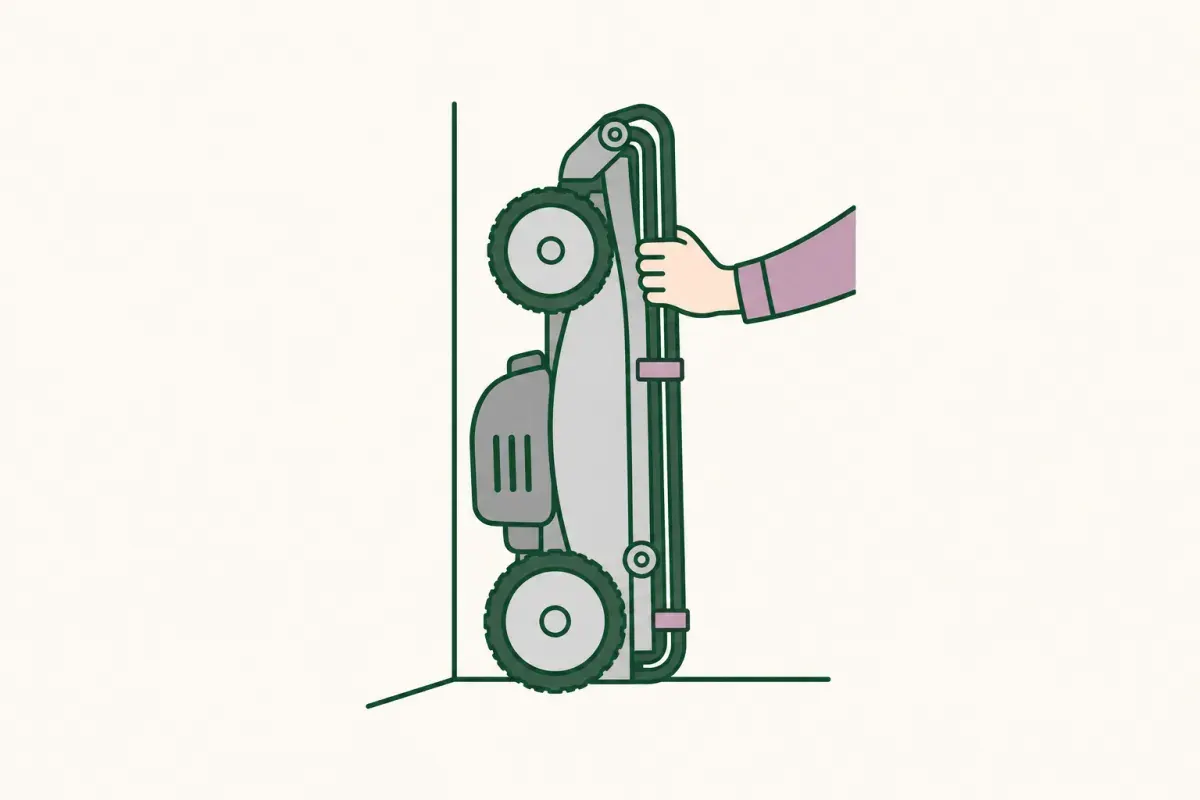
Weight and storage favor battery too. With no engine on the deck, the mower is lighter to steer around beds and to lift into an SUV. With no fuel to leak, many fold and stand on end in a garage corner. In the store, fold the handle and tip the mower upright yourself.
Battery adds one chore. Keep the pack indoors, cool and dry, not in a hot or freezing shed, and brush the mower clean instead of pressure-washing it.
Check three things before you buy
Before you pay, check your local rules, your local repair options and the batteries you already own. A growing number of towns, and the state of California, have banned or plan to ban some or all gas lawn equipment, so check your state and local rules before buying gas.9
Then ask where the mower would be fixed. Small-engine shops are easy to find. Service centers for battery equipment are scarce, and a repair can keep the mower away for weeks or months.10 Find the nearest one for the brand you are considering.
Last, look at the tools on your garage wall. A mower battery that also fits the same brand's trimmer or blower is a spare you get to use all year. When you are ready to compare specific machines, start with our ranking of battery mowers.
Before you buy
- How much lawn is there?: Measure the grass, not the lot, and note slopes
- How often does it overgrow?: Weekly mowing suits battery; long gaps suit gas
- What does a spare cost?: Look up the extra battery price and its warranty
- Who repairs this brand nearby?: Find the closest service center before you pay
- Any local limits on gas?: Check your state and local rules
“The best mower in the country is useless without parts and service in your zip code.”
Back in that aisle, with gas on one side and battery on the other, you now know which question comes first: how much grass you cut, and how often you let it get away from you. Answer that honestly, price a spare battery, and the choice mostly makes itself. Then fold one, lift one and push one before you pay.
Reviews and rankings
- 1House Digest “For yards between 1/2 and 2 acres, an electric mower is still a good option, but look for models that have swappable battery packs.”
- 2StPeteMakes · 24:06 “It says a 10 amp hour battery will run 70 minutes in this mower. Um on speed two at full walking pace I get about half that.”
- 3opereviews.com “If you run out of gas, you just have to walk back to the garage or trailer for a refill instead of waiting 45 minutes to more than 3 hours for a battery to charge.”
- 4John Malecki Unscrewed · 30:15 “it did take three passes to go from the high grass down to a two. And I lost 10% of my battery just to do that one strip.”
- 5opereviews.com “Cordless mowers need battery replacements every 3 to 5 years, and many won’t live longer than 5 years thanks to their more complex electronics.”
- 6Machinery Nation · 5:04 “ego offer a 5-year domestic warranty on this product and a three-year domestic warranty on their batteries”
- 7Make It or Break It · 6:34 “Gas lawn mower is about 81 dB and this one's around 71 dB when you're running the self-propelled.”
- 8Homey Vibe · 2:31 “If you leave gas in the tank over the winter without adding a stabilizer, the carburetor will gum up and restrict the fuel lines.”
- 9bobvila.com “More than 100 communities across the country, including the state of California; Burlington, Vermont; and Washington, DC, have banned or plan to ban certain types of or all gas-powered lawn equipment.”
- 10opereviews.com “There aren’t nearly as many service centers for battery-powered lawn care equipment, and you might need to wait weeks or months to get your mower back.”